

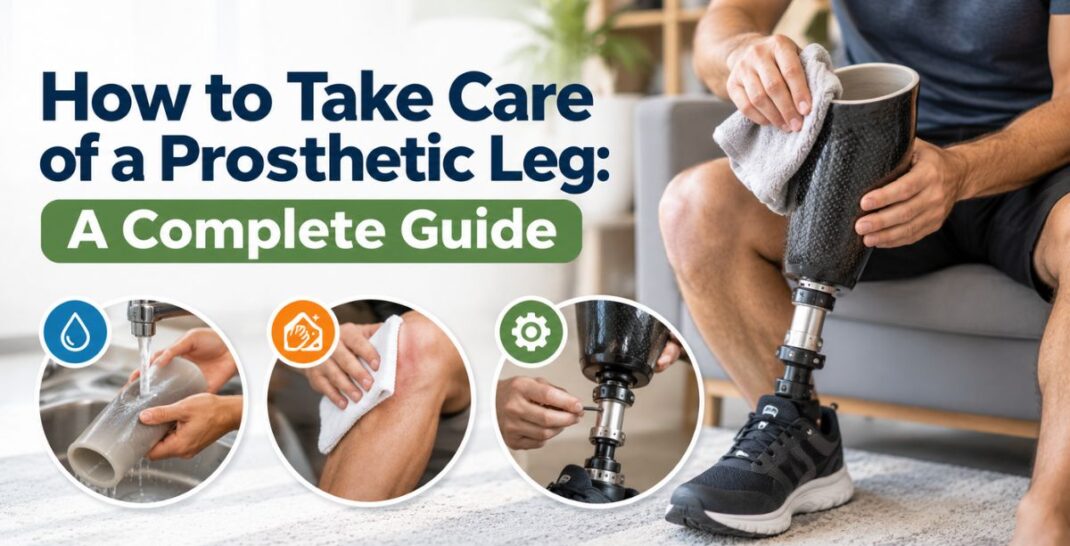
Here’s something we notice a lot at Amputee Clinic. People learn to walk on a prosthetic leg faster than they learn to actually take care of one. Makes sense, honestly; walking feels urgent, and care feels like homework. But the care part is what quietly decides whether the leg still fits right in six months, whether it smells fine, whether it lasts as long as it should. We see the same handful of mistakes on repeat, and almost none of them come from carelessness. Mostly it’s just that nobody walked people through the actual routine early on.
So here it is, the routine nobody hands you on day one.
Why This Matters More Than People Think
A prosthetic leg isn’t just hardware you strap on. It sits against your skin for most of your waking hours, sometimes 12 to 16 hours a day once you’re fully adjusted. That’s a long stretch for sweat, bacteria, and friction to collect in one spot. Skip care for a few days, and you’re not just dealing with a bad smell. You’re risking irritation, skin breakdown, and infections that can sideline you from wearing the device at all, which is the last thing anyone wants after working so hard to get mobile again.
Manufacturers like Össur and Ottobock generally recommend cleaning the liner and residual limb daily. Not weekly. Not “whenever it starts smelling off.” Daily. That’s a stricter bar than most new users expect walking in, and honestly, it’s the first habit worth locking down before anything else.
Daily Care for Your Residual Limb
Start with the skin, since everything else kind of depends on it staying healthy.
Wash your residual limb every day with mild, pH-neutral soap and warm water, then dry it fully before putting anything back on. Trapped moisture is one of the fastest ways to irritate skin that’s already under constant pressure. Check your limb each time you take the prosthesis off. Look for redness that doesn’t fade within 15 to 20 minutes, blisters, or anything that just feels off compared to the rest of the limb. Catching this stuff early beats treating an open sore later, every single time.
Skip lotions or oils right before putting the prosthesis on. Residue there can mess with suspension and cause slipping inside the socket, which nobody wants mid-walk. If your skin runs dry, moisturize at night instead and let it fully absorb before your next wear session.
How to Clean a Prosthetic Leg Liner
This is the step people skip most, and ironically it’s the one that causes the most trouble down the line. Liners sit against skin all day, collecting sweat and oils the same way a sock would, except nobody treats them like a sock that needs washing.
A routine that actually works: rinse the liner in lukewarm water right after taking it off, before sweat has time to set in. Use a small amount of mild, pH-neutral soap, working it gently with your hands rather than scrubbing. Rinse it thoroughly, since leftover soap irritates skin just as much as leftover sweat does. Let it air dry overnight, completely, before wearing it again. A liner that’s even slightly damp is uncomfortable and basically an invitation for bacteria.
Skip bleach, harsh solvents, alcohol-based cleaners, and high heat like dryers or direct sun, unless your liner’s manufacturer specifically clears it. Heat, especially, can warp the material and shorten its life fast.
If you only have one liner, this gets tricky, since you need it dry before the next wear session. A lot of clinics recommend owning two and rotating them, wearing one while the other dries fully. Feels like an extra cost upfront. Usually costs less than dealing with skin breakdown, or replacing a liner that broke down early from being worn damp too often. If your current liner is already showing wear, it might be worth asking your prosthetist about custom prosthetic options built specifically around your limb shape, since a better original fit often means less liner stress in the first place.
Weekly and Monthly Maintenance
Daily care handles skin and liner. A few other things need attention on a slower cycle.
| Task | Frequency | Why It Matters |
| Liner deep clean | Weekly | Clears buildup that daily rinsing can miss, especially for active users |
| Socket interior wipe-down | Weekly | Stops residue and odor from transferring through the liner |
| Sock and cushion check | Weekly | Worn socks throw off fit and create pressure points |
| Full prosthesis check (joints, bolts, alignment) | Monthly | Catches mechanical wear before it affects your gait or safety |
| Prosthetist follow-up | Every 3 to 6 months, sooner if fit changes | Limb volume shifts over time, and sockets need rechecking |
The monthly mechanical check is the one people skip most, mostly because nothing feels wrong until suddenly it does. Loose bolts, worn pivot points, small alignment shifts — these build slowly enough that they’re easy to miss day to day.
Caring for the Prosthesis Itself
Beyond skin and liner, the device needs its own basic upkeep. Wipe the socket interior regularly with a damp cloth and mild soap, since sweat and oils transfer there too, even through a liner. Keep the exterior clean and dry, and don’t submerge components that aren’t rated for water, especially anything with electronics or a microprocessor built in.
Pay attention to how the prosthesis sounds and feels. New clicking, unexpected looseness, a change in how it sits — these are worth having checked rather than brushed off. These parts take real mechanical stress every single day, and small issues caught early are almost always a quick fix. The same issue left alone for months can mean a bigger repair, or a part replacement nobody budgeted for.
Mistakes That Shorten a Prosthesis’s Life
A few patterns show up constantly in our clinic. Wearing a liner that isn’t fully dry, which traps moisture and speeds up material breakdown. Using strong soaps or household cleaners never meant for silicone or gel liners. Letting sock ply sit unadjusted for weeks while limb volume quietly shifts, creating pressure points that a two-minute fix could’ve prevented. Skipping prosthetist visits because “everything feels fine,” when a quick check could’ve caught something before it became an actual problem.
None of these feel dramatic in the moment. They add up, though, and most of the repair visits and skin issues we see trace back to one or two of these habits slipping for a few weeks too long.
When to See Your Prosthetist Sooner Than Planned
Some things shouldn’t wait for your next scheduled appointment. Reach out promptly for persistent redness that won’t fade, sores showing up repeatedly in the same spot, a liner that’s cracked or losing grip even after proper cleaning, unusual noises or looseness in the joints, or irritation that’s getting worse despite good hygiene. This also matters a lot for anyone using prosthetics above the knee, since the above-knee socket carries more weight through a longer lever, so small fit or liner issues tend to snowball faster than they would below the knee.
Frequently Asked Questions
- How often should I clean my prosthetic leg?
The liner and residual limb should be cleaned daily, with a deeper liner clean weekly. Honestly, learning how to take care of a prosthetic leg starts right here, treating daily cleaning as non-negotiable rather than optional, since skipping even a few days raises your risk of odor, irritation, and skin breakdown.
- How do I clean a prosthetic leg liner without damaging it?
Rinse with lukewarm water, use a small amount of mild pH-neutral soap, and stay away from bleach, alcohol-based cleaners, and high heat. Knowing how to clean a prosthetic leg liner properly also means letting it air dry fully overnight instead of rushing it with a dryer or direct sun.
- Can I use regular soap to wash my prosthetic liner?
Mild, pH-neutral soap is generally fine, and some manufacturers even approve gentle dish soap. Skip antibacterial or scented soaps unless your liner’s manufacturer specifically clears them, since leftover residue or harsh ingredients can irritate skin or wear down the material faster.
- What happens if I don’t clean my prosthetic leg regularly?
You’re looking at odor, reduced suspension, and a higher chance of skin irritation or breakdown, particularly around trim lines and bony areas. Trapped sweat and bacteria also degrade liner material faster over time, which shortens how long it actually lasts.
- How do I know if my prosthetic liner needs replacing?
Watch for cracks, thinning, tears, or suspension that doesn’t improve even with proper cleaning. Persistent odor, staining, or skin breakdown returning in the same spot are all signs it’s time to talk replacement with your prosthetist. If cost is a concern at that point, it’s worth checking whether insurance covers prosthetics before assuming a new liner isn’t in reach.
Final Thoughts
Taking care of a prosthetic leg isn’t complicated. It just needs to be consistent. A few minutes of daily cleaning, a weekly look at the liner and socket, a monthly check on the mechanical parts — that combination heads off most of the problems that send people back to the clinic sooner than they’d like. It feels like extra effort for the first couple of weeks. Then it just becomes part of the day, the same way brushing your teeth did somewhere along the way.
If you’re noticing irritation, a liner that doesn’t feel right anymore, or you just want a second opinion on your current routine, reach out to the team at Amputee Clinic. We’re glad to go through it with you and make sure your setup is actually working the way it should.