Understanding Prosthetic Coverage at Amputee Clinic and Your Next Steps
Planning for a prosthetic limb involves far more than choosing the right device. For many patients and families, it comes at a time when they are already managing surgery recovery, rehabilitation, changes in mobility and the emotional adjustment that follows limb loss.
Questions about insurance and cost can quickly add another layer of stress when what you really need is clarity and support. So, does Medicare cover prosthetics? In many cases, yes, Medicare often helps cover prosthetic limbs and related care when they are considered medically necessary.
In this latest blog, we explain how Medicare prosthetic coverage works, what services may be included, what documentation is usually required and how we help patients at Amputee Clinic in Fort Myers move through the process with less confusion and more confidence.
Does Medicare Cover Prosthetics?
Yes, Medicare often provides coverage for prosthetic limbs when they are prescribed as medically necessary by a qualified healthcare provider. This can include lower limb prosthetics, upper limb prosthetics and certain orthotic devices depending on your medical needs, mobility goals and rehabilitation plan.
Coverage can vary depending on whether you have Original Medicare or a Medicare Advantage plan. Additional fittings, follow-up appointments, therapy and replacement components may also affect how coverage is applied, which is why understanding your individual plan is an important part of preparing for treatment.

Understanding Medicare prosthetic coverage can help patients plan treatment with greater clarity and confidence.
What Prosthetic Services May Be Covered?
Medicare prosthetic coverage may include more than the prosthetic limb itself. The full treatment process often involves fittings, adjustments, repairs and ongoing follow-up care, all of which may be considered as part of your overall rehabilitation plan, depending on your medical needs and individual policy.
This may include services such as:
- Initial prosthetic limb fitting
- Custom socket design and adjustments
- Prosthetic repairs and maintenance
- Replacement components where medically appropriate
- Follow-up appointments and monitoring
- Certain orthotic devices where needed
- Physical therapy related to prosthetic adaptation
What Documentation is Usually Needed?
Insurance approval for a prosthetic limb usually depends on clear medical documentation that shows why the device is needed and how it will support daily life. Medicare and other insurance providers want to understand how the prosthetic will improve movement, independence and long-term function rather than simply approving the device itself.
This may include a physician’s prescription, records relating to the amputation, rehabilitation plans, mobility goals and clinical notes explaining how the prosthetic will support everyday mobility. In some cases, additional supporting information may also be needed for repairs, replacements, or upgraded components.
How Long Does the Insurance Approval Process Take?
There is no single timeline for insurance approval, as it depends on your provider, your plan and the type of prosthetic care involved. In many cases, approvals may take anywhere from several days to a few weeks, particularly for new prosthetic limbs, replacements, repairs, or upgraded components.
Delays often happen because of missing paperwork rather than the treatment itself. Physician prescriptions, supporting medical records, rehabilitation plans and proof of medical necessity all play an important role in helping authorizations move forward without unnecessary setbacks. Having the right support during this stage can make the process far less stressful, and at Amputee Clinic, we help guide patients through each step.
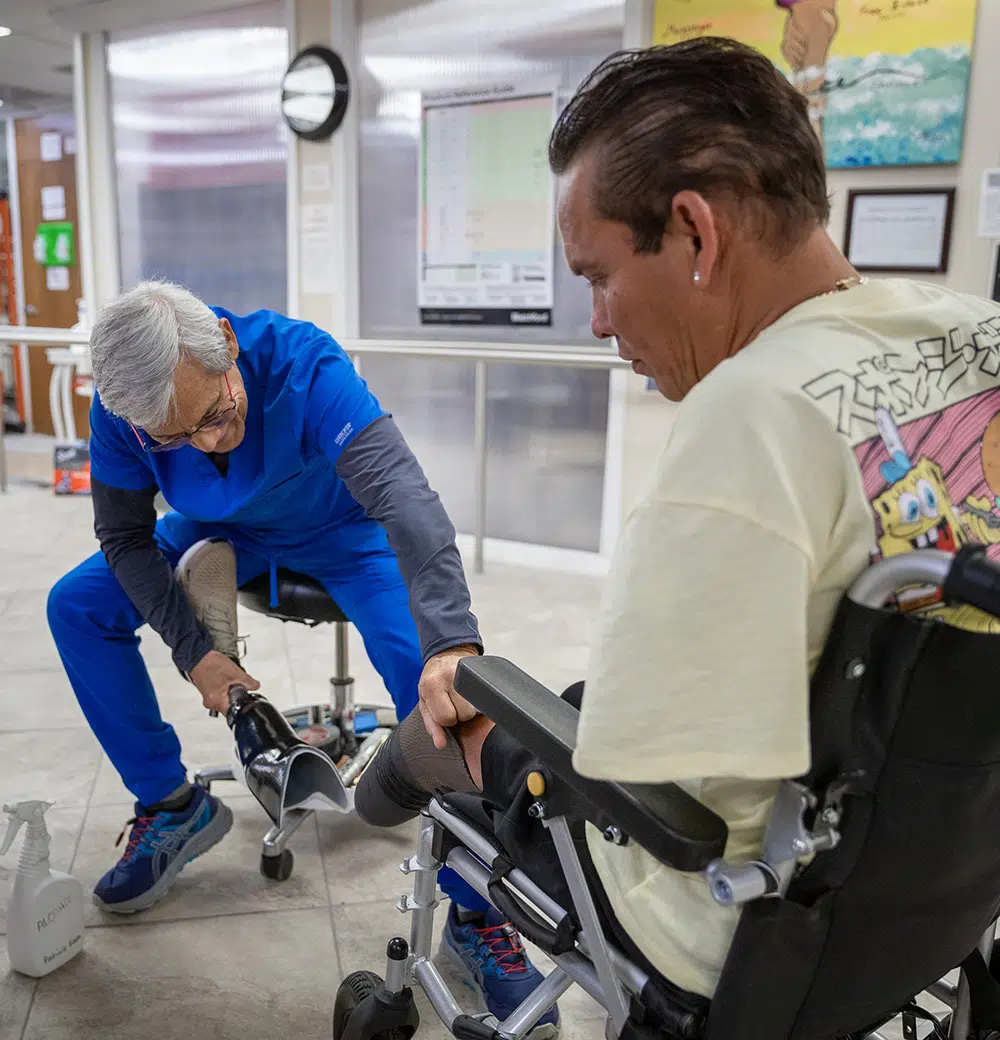
Insurance approval for prosthetics often depends on medical documentation and rehabilitation planning.
How Does Amputee Clinic Help With Insurance and Billing?
Insurance paperwork can feel overwhelming when you are already focused on recovery, rehabilitation and adjusting to life after amputation. Our goal is to make the process clearer and easier by helping patients understand what is needed, what happens next and how to avoid unnecessary delays.
We support patients with:
- Insurance verification and checking available coverage
- Authorization requests and approval paperwork
- Billing coordination and payment guidance
- Prescription support and required documentation
- Communication with providers and insurers
- Helping patients and families understand each step
We accept most insurance plans and work closely with patients and families throughout the process. Having clear guidance and the right support can make approvals, billing and treatment planning feel far less overwhelming.
What if Medicare Does Not Cover Everything?
Even when Medicare helps with prosthetic limb coverage, some parts of treatment may still involve out-of-pocket costs. This can depend on your plan, the type of prosthetic recommended, replacement timelines, or whether advanced components fall outside standard coverage guidelines.
Certain upgrades, specialized materials, or additional therapy needs may not be fully included under every policy. In some cases, replacement devices may also require additional approval depending on timing and medical necessity.
If this happens, it does not always mean treatment cannot move forward. At Amputee Clinic, we help patients understand their options, explain any potential costs clearly and discuss alternative solutions where appropriate so there are no unnecessary surprises. The goal is to make sure patients can move forward with confidence and a plan that supports both their mobility needs and their long-term recovery.
Planning Your Next Steps With Confidence
Understanding Medicare and prosthetics is an important part of planning for recovery and long-term mobility. Knowing what may be covered, what documentation is needed and where additional costs may arise helps patients make informed decisions and removes some of the uncertainty during an already challenging time.
At Amputee Clinic in Fort Myers, our role goes beyond fitting a prosthetic limb. We support patients through the clinical process, insurance approvals and ongoing follow-up care so they can focus on rebuilding confidence, restoring mobility and moving forward with the right team beside them.
If you have questions about Medicare prosthetic coverage, insurance approvals, or your next steps after amputation, our team is here to help. Contact us to discuss your options and get the guidance you need to move forward with confidence.
FAQs
Does Medicare cover prosthetic leg replacements?
Medicare may help cover prosthetic leg replacements when they are considered medically necessary, particularly if the current prosthetic no longer fits properly, is damaged, or no longer supports safe mobility. Approval usually depends on clinical documentation and your individual Medicare plan.
Does Medicare cover prosthetic arm replacements?
Yes, Medicare may provide coverage for prosthetic arm replacements if there is a clear medical reason for replacement and supporting documentation is provided. This may include changes in physical condition, wear over time, or functional limitations with the existing prosthetic.
Does Medicare Advantage cover prosthetics differently?
Medicare Advantage plans often include prosthetic coverage, but the details can vary depending on the provider and policy. Some plans may have different approval requirements, provider networks, or out-of-pocket costs compared to Original Medicare, so checking your individual plan is important.
Can Medicare help cover prosthetic repairs?
In many cases, Medicare may help cover prosthetic repairs when they are necessary for function, safety, or proper fit. Repairs may still require documentation and approval, particularly for major component replacements or specialized adjustments.
What should I do before my first prosthetic consultation?
Before your first consultation, it helps to bring your insurance details, referral information, medical records and any relevant rehabilitation notes if available. This allows the clinic to better understand your needs and helps make insurance verification and treatment planning more efficient.