

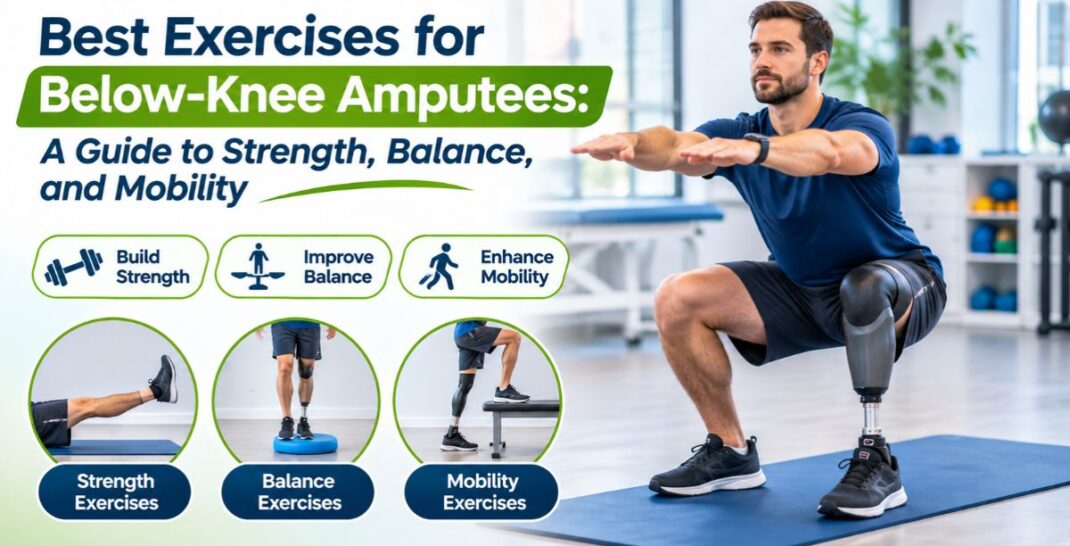
Most people expect rehab after a below-knee amputation to be about the prosthesis. Learn the leg, learn to walk, get on with life. What surprises them is how much of the outcome is decided by muscles they can’t even see in the mirror: the thigh, the hips, the core. A below-knee prosthesis doesn’t move on its own. Your body drives it, and a body that’s stronger, steadier, and more flexible makes that job a lot easier.
Here’s a practical look at the best exercises for amputated leg below knee recovery, how they fit into rehab, and how to do them without hurting yourself. One firm note before the list: these should be done with guidance from a physiotherapist or physician, because the right moves, the right number, and the right timing depend on your surgery and your healing.
Why Exercise Matters So Much After a Below-Knee Amputation
Walking with a prosthesis costs more energy. A systematic review and meta-analysis of the energy cost of walking after lower limb amputation found that people with amputations used about 35% more energy than able-bodied controls, with individual estimates ranging from 12% to 102% depending on amputation level, cause, and walking speed. Below-knee walking sits at the lower end of that spread, since you keep your own knee, but the extra effort is still real.
Exercise helps in more ways than just stamina:
- It builds the strength that controls the prosthesis and the socket.
- It keeps joints from tightening up. After an amputation, the knee and hip can stiffen into a bent position if they’re left that way, and that makes fitting and walking much harder.
- It improves balance, which matters on stairs, slopes, and uneven ground.
- It supports your sound leg, which now does a lot of extra work.
Before You Start: A Few Ground Rules
Healing comes first. Early exercises are usually gentle and done lying or sitting, and your team will tell you when to add more. Beyond that:
- Stop any exercise that causes pain, and tell your physiotherapist or doctor.
- Keep the residual knee straight as much as possible during hip exercises, as directed.
- Don’t sit with your residual knee bent over a pillow or hanging off the bed for long stretches. That position can lead to a stiff, bent knee.
- Don’t copy a repetition count from the internet. Royal Devon University Healthcare’s patient leaflet leaves its repetition counts blank on purpose, because they need to come from your physiotherapist.
Exercises for the Residual Limb and Hips
These are the foundation exercises used in early recovery. They’re drawn from patient guidance published by Alberta Health Services and the Royal Devon NHS Trust, and your own program may differ.
| Exercise | What It Targets | How It’s Done |
| Quadriceps knee bracing | Front of the thigh | Seated and supported, tighten the thigh to straighten the residual knee. Hold about 5 seconds |
| Inner-range quads | Front of the thigh, knee straightening | Rolled towel under the knee, lift until the knee is straight. Hold about 5 seconds |
| Hip extension (lying on stomach) | Buttocks, back of the hip | Lie face down, lift the residual limb off the bed with the stomach flat |
| Bridging | Buttocks, core | Lie on your back with a rolled towel under the residual limb, squeeze and lift your hips. Hold about 5 seconds |
| Hip abduction | Outer hip | Lie on your side, lift the residual limb up without rolling forward |
| Hip adduction | Inner thigh | Squeeze a rolled towel or pillow between your legs. Hold about 5 seconds |
| Hip flexor stretch | Front of the hip | Pull the sound knee toward your chest while pressing the residual limb down. Hold about 10 seconds |
A couple of cautions on that last one. Skip the hip flexor stretch if you have an artificial hip on your sound side. And lying face down is worth doing if you can, since it stretches the front of the hips, which tighten from long hours of sitting. If lying on your stomach isn’t comfortable, lie on your back instead.
Resistance Work for the Knee
Once your team gives the go-ahead, resistance exercises add strength where it matters most. In a seated version, a stretchy band is looped around a solid chair and the front of the residual limb below the knee, and you straighten the knee against the band, holding about 3 seconds. For the back of the leg, the band is anchored to something solid and looped around the back of the residual limb, and you bend the knee against it. Both are described in Alberta Health Services guidance, and a rolled-up towel or no band at all can substitute when equipment isn’t available.
Exercises for the Sound Leg
Don’t ignore the leg you still have. The Royal Devon leaflet includes simple sound-leg work, such as ankle pumps, heel slides, and quad sets, usually two or three times a day. It sounds minor, but the sound leg carries more load now, and keeping it strong and mobile helps with balance and walking.
Core and Upper Body
A strong core steadies your pelvis, and that steadiness carries down into your walking. Sit-ups with the knees over a foam roller, chair presses where you push through your arms to lift your hips off a seat, and kneeling balance work are all used in rehab programs. Chair presses also build the arm strength you’ll want for transfers, crutches, and the occasional scramble off a low sofa.
Balance and Walking Practice
Once you have a prosthesis, exercise moves from the floor to your feet. A physiotherapist will usually start with parallel bars, then standing weight shifts, then walking with a support, and later uneven ground, curbs, and stairs. Practice in short sessions. Fatigue is when form falls apart. And wear the same shoes you walk in every day, so what you practice matches what you’ll face.
Foot choice matters here too. A prosthetic foot that suits your activity level can make balance work easier, so it’s worth learning about the different prosthetic feet available if you feel unsteady or tired quickly.
How Often Should You Exercise?
That depends on you, and it’s another reason to follow a professional plan. The Royal Devon leaflet suggests residual limb exercises at least three times a day, continuing after you start wearing a prosthesis, and lying flat for 10 to 15 minutes, building up to 20 to 30 minutes, twice a day. Treat that as one example, not a prescription. Short, regular sessions usually beat occasional long ones.
Signs to Slow Down or Call Your Team
Stop and get advice if you notice sharp pain, new swelling, redness or warmth around the limb, or anything that feels worse after exercising rather than better. Overdoing it can cause soreness, and sometimes bleeding or discomfort at the surgical site, so more is not always better. If a socket is rubbing or pressing as your strength and activity increase, that’s a fit problem to raise early, and it’s the kind of thing that custom prosthetics fittings are designed to address.
Supporting Your Training
A few practical things help. Wear your compression sock or shrinker as directed, since swelling can make exercise uncomfortable. Keep your skin clean and dry, and check it after sessions. A few extras like resistance bands, liners, and spare socks fall under prosthetic supplies, and it’s worth asking what you actually need. If cost is a worry, Does Insurance Cover Prosthetics? is a sensible first read before you decide anything.
Frequently Asked Questions
1. What are the best exercises for below-knee amputees?
Common early choices include quadriceps knee bracing, bridging, hip extension, hip abduction, and sound-leg exercises, done under the guidance of a physiotherapist. Your program will change as you heal and begin walking with a prosthesis.
2. When can I start exercises for amputated leg below knee recovery?
Gentle exercises often begin soon after surgery, but the timing depends on your healing and what your surgeon and physiotherapist advise. Don’t start on your own, because the wrong moves too early can interfere with recovery.
3. How often should I do residual limb exercises?
One leaflet suggests at least three times a day, continuing after you start wearing a prosthesis. Your own frequency should come from your physiotherapist, who can adjust it as you progress.
4. Why is my knee getting stiff, and how do I prevent it?
Knees and hips can tighten if they stay bent for long periods. Straightening exercises, lying flat, and avoiding long stretches with the residual knee bent over a pillow all help. Ask your physiotherapist for a plan that fits you.
5. Can exercise help with balance and walking on a prosthesis?
Yes. Stronger hips, thighs, and core give you more control of the prosthesis, and walking practice builds confidence on stairs and uneven ground. Many people also find their endurance improves over time.
Final Thoughts
You don’t need a gym or special equipment to start building a stronger base. What you need is a plan from the right professionals, patience with the pace, and consistency. The work isn’t glamorous, but it’s what turns a new prosthesis into something that feels like part of you.
If you’d like help linking your rehab to the right fit, reach out to the team at Amputee Clinic. We’ll look at your limb, your goals, and your current setup, and work with you and your care team on a plan. This article is general information and doesn’t replace advice from your physiotherapist or physician.