

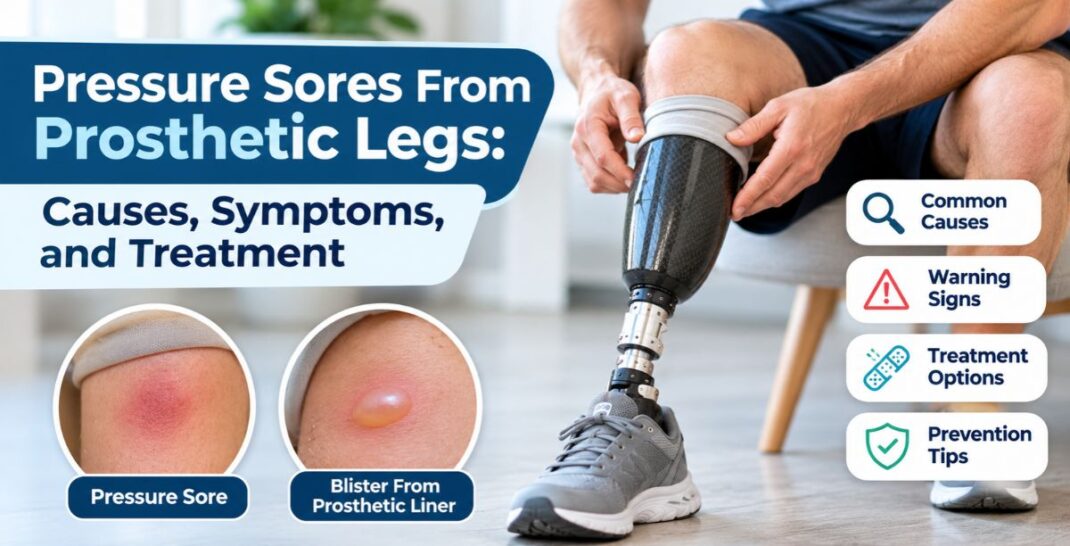
You learn to read your own skin after a while. That’s just part of life with a prosthetic leg. A spot that felt totally fine at breakfast starts bothering you by lunch. Maybe there’s a pink patch near the end of your limb that definitely wasn’t there this morning. Most people shrug it off. We get it. You’ve got things to do and stopping for a little redness feels like overreacting.
Here’s the thing though. A pressure sore from prosthesis doesn’t usually stay small. Give it a couple of days of ignoring and that pink patch can open up into a real wound. And blisters from prosthetic liner? Those show up at the worst possible times. Long day on the golf course. Hot afternoon running errands. A week where you walked more than you planned. They hurt, they make the limb harder to wear, and an open blister is basically rolling out the welcome mat for infection.
At Amputee Clinic, we see these problems every single week. So let’s talk about what’s actually going on, how to catch it early, and what to do when it happens.
Why Does a Pressure Sore From Prosthesis Happen?
A good socket spreads your weight across the limb. That’s the whole idea. Load lands on the thick, padded tissue and stays away from bone and thin skin. But sockets don’t stay perfect forever. The fit drifts. And when it does, pressure starts piling up on a few specific spots instead of spreading out.
Where those spots are depends on your amputation level. Below-knee folks usually see trouble along the front of the shinbone or right around the fibula head on the outside of the leg. If you’re dealing with an above the knee amputated leg, the hot spots tend to be at the very end of the residual limb and up near where the socket meets the pelvis. Different anatomy, different pressure points.
But pressure by itself isn’t the whole story. Shear is just as bad, maybe worse. Every time you take a step, the limb shifts a little inside the socket. That sliding motion drags on the skin. Now add sweat and heat into the mix, which softens the skin and makes it way more fragile. If pressure stays high on one spot for long enough, blood flow through that tissue drops off. That’s when the real damage starts.
A few things the Amputee Clinic team sees all the time that make it worse:
- Your limb changes shape. Weight gain, weight loss, muscle changes, swelling that builds through the day, even the shift from winter to summer. All of it reshapes the limb. A socket that fit great in February might feel loose or tight by July.
- Liners wear out. A thin liner loses its cushion. Folds and wrinkles press into the skin. Grit gets trapped between the liner and your leg and basically acts like sandpaper all day. You might not even notice until the skin is already angry.
- Then there’s the sock thing. Adding socks to a loose socket works for a little while, but it also cranks up the pressure on the tissue. Taking socks away from a tight socket does the opposite. Either way, if you’re constantly adjusting sock layers, the socket is trying to tell you something.
- And honestly, a lot of people just wear the limb too long too soon. You get a new fitting or come back from a break and you want to put in a full day right away. The skin isn’t ready for that yet. It needs time to build back up.
- Oh, and Florida. We can’t talk about skin problems without talking about Florida. The humidity keeps your skin wet for hours under a sealed socket, and wet skin breaks down way faster than dry skin. It’s just a fact of living here.
What’s Going On With Blisters From Prosthetic Liner?
Blisters are mostly a friction problem. The liner is supposed to grip your skin gently without rubbing it raw. When it stretches out, loses gel, or stops fitting right, the skin starts sliding against the material on every single step. Do that for a few hours and the top layer of skin lifts up and fills with fluid. There’s your blister.
Folds cause a lot of these. If you don’t roll the liner on evenly, a crease can dig into one small patch of skin all day long. Dirt and lint trapped under the liner make it worse. And if you’ve been washing the liner with harsh soap or storing it damp, the material breaks down faster and loses both its grip and its cushion.
Blisters tend to show up at the socket edge where the liner meets the hard material, and along the sides of the limb where stress is highest.
Signs You Should Pay Attention To
Early problems are easy to fix. Late ones take forever. So catch it early.
Take the prosthesis off and press your fingertip on any red area. If the skin goes back to its normal color within about 30 minutes, you’re probably fine. If the redness just sits there, something’s off. That’s the single best test you can do at home.
Other things to watch for:
- Warmth in one specific spot
- Swelling that doesn’t match the rest of the limb
- Blisters that keep coming back
- Any open skin or scabbing
- Pain that gets worse as the day goes on
- Pain that only exists when the limb is in the socket
And if you notice odor, yellow or green drainage, fever, or chills, that’s infection territory. Don’t wait on that one. Call your doctor the same day.
For anyone managing diabetes or circulation issues, even small changes deserve attention. Wounds move fast when blood flow is compromised.
The Daily Skin Check Habit
This is the one thing that prevents more trouble than anything else we tell patients at Amputee Clinic. Check your skin every day. Right after the prosthesis comes off, before the sock goes on, while the limb is still cool. Use a hand mirror for the end and the back of the limb, or ask someone to look for you.
Check the bony spots. Check where the liner folds. If something looks new, write it down with the date. Doesn’t have to be fancy. A note on your phone works fine. But a simple log helps you spot patterns, and it gives your prosthetist real information to work with instead of guesswork.
Treating a Pressure Sore From Prosthesis
Treatment depends on how deep the damage is, but step one is almost always the same. Stop wearing the prosthesis over that area. Let the skin heal. Mild redness might clear up in a few days. Open wounds can take weeks. And pushing through the pain doesn’t make you tough. It just makes the recovery longer.
For wound care at home, clean the area gently with mild soap and water. Rinse it well. Pat it dry. Use whatever dressing your provider recommends. And don’t pop blisters yourself unless a clinician specifically tells you to. Large blisters are usually drained in a sterile setting because an open blister infects so easily.
If the sore is open, spreading, or showing any infection signs, see your doctor or a wound care specialist. You might need antibiotics. Sometimes dead tissue has to be cleaned out before healing can start.
Once the skin recovers, the socket needs attention. Your prosthetist at Amputee Clinic will check the fit, hunt for pressure points, look at the liner condition, and figure out whether your limb volume has shifted. The fix could be a new liner, a sock ply change, an alignment tweak, or a socket modification. For patients whose limbs change volume frequently, an Adjustable Prosthetic Leg Socket can be a game changer because it adjusts with you instead of needing a rebuild every few months.
When you’re ready to start wearing the limb again, go slow. Short periods at first, then build up. Your prosthetist can help you figure out the right pace. Our guide on How Long Can You Wear a Prosthetic Leg a Day covers this in more detail.
How to Keep These Problems From Coming Back
Most of the real prevention happens before anything goes wrong.
Take care of your liner. Wash it every day with mild soap and lukewarm water. Rinse it well. Let it air dry completely before you put it back on. Don’t use lotions or oils on it because most of them break down silicone over time. And replace the liner when it starts thinning or losing its grip, not when it falls apart completely.
Stop using extra socks to cover up a bad fit. Seriously. If you’re adding layers every couple of weeks, the socket needs to be checked. Call Amputee Clinic. It’s a five-minute conversation that can save you weeks of skin trouble.
Build your wear time gradually after a new fitting, a long break, or a demanding week. Your skin adapts but it needs time.
Manage moisture as best you can. Moisture-wicking liner socks help. Drying the limb after sweating helps. Taking the prosthesis off during breaks in the shade helps. In Florida, this stuff isn’t optional.
Know your personal hot spots. If you wear a lower leg prosthetic, pay extra attention to the front of the shin and the fibula head. If you use a partial foot prosthetic, check the toes and the front of the foot because those devices can rub in ways that aren’t obvious right away.
And keep up with the basics. Our guide on How to Take Care of a Prosthetic Leg walks through the daily routine if you want a refresher.
When to Pick Up the Phone
Call Amputee Clinic if the socket feels different. If you’ve started adding socks. If the liner looks beat up. If your skin shows any of the warning signs we talked about. You don’t need to wait for your next scheduled appointment, and you really shouldn’t try to tough it out. Most of these problems are quick fixes when they’re caught early. They become much bigger deals when they’re not.
Frequently Asked Questions
- How do I know if the redness is a pressure sore from prosthesis or just normal irritation?
The fingertip test is your best friend. Press on the red spot after taking the limb off. If the color comes back to normal within 30 minutes, it’s probably just irritation. If the redness sticks around, feels warm, or shows up in the exact same spot day after day, have the Amputee Clinic team look at it.
- Will blisters from prosthetic liner go away on their own?
Small ones that haven’t popped often heal with rest and a clean, dry environment. Bigger blisters, broken blisters, or ones that keep coming back need professional attention. And if you have diabetes, don’t assume any blister is harmless.
- Can I keep wearing my prosthesis over a small sore?
Generally no. The socket pressing on damaged skin slows healing and usually makes the wound worse. Take the limb off the affected area and call your provider. They’ll tell you how to handle it.
- How often do I need to replace my liner?
Depends on your activity level, how many hours you wear the limb, and how well you maintain it. A lot of people get a few months out of a liner, but if it’s thinning, tearing, or losing grip, replace it now regardless of the timeline.
- Will a pressure sore from prosthesis mess up my ability to wear the limb long term?
A single sore that heals properly usually doesn’t cause lasting issues. Repeated sores in the same spot are a different story. They usually mean the socket needs to be adjusted or replaced. Getting ahead of the problem early is the best way to protect your mobility down the road.