

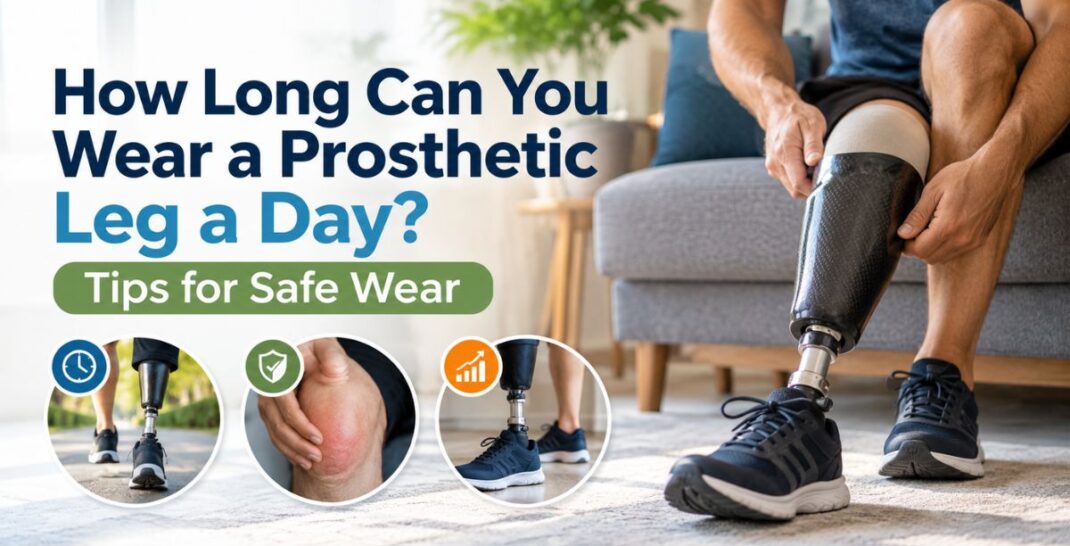
Week two is when it happens. Almost every new amputee we see at Amputee Clinic hits this same question around then, not “will I walk again,” that one gets answered pretty early, but “okay, how long can I actually keep this on?” And there’s no tidy number to hand someone. It depends on where you are in recovery, how your limb is healing, what device you’re using, a bunch of things that don’t fit on a sticky note.
We’ve watched two types of patients struggle with this. One pushes too hard on day three and pays for it with a blister by Thursday. The other barely wears the leg twenty minutes at a stretch because they’re terrified of doing damage. Neither one is crazy. Neither one is quite right either. So let’s actually walk through what a sane wear schedule looks like, how it shifts over time, and what your skin is trying to tell you if you’d just listen to it.
Why There’s No Single Right Answer
Everyone wants a clean number. Eight hours. All day. Something you can write on a calendar and follow blindly. Except the real answer moves depending on how new your prosthesis is, how your residual limb is doing, and what kind of device you’ve got strapped on.
Early on, most clinics have you ease in rather than jumping straight to full days. A pretty standard approach: thirty minutes to an hour on day one, add roughly that much each day after, and check your skin religiously after every session. Most people get somewhere close to full-day wear within about two weeks. Plenty take longer. That’s not a failure, that’s just how bodies work.
Once you’re established, once your limb’s settled and your socket actually fits, a lot of experienced users wear their prosthesis twelve to sixteen hours a day, mostly only taking it off to sleep. That’s not where you start. That’s where things tend to land once your body and the socket have had real time to get used to each other.
A Rough Break-In Schedule
Here’s a version of the gradual approach many prosthetists lean on. Treat it as a starting point, not gospel, since your own plan should come from your actual prosthetist based on your limb and your skin.
| Day | Approximate Wear Time | What to Watch For |
| Day 1 | 30 to 60 minutes total | Redness lasting more than 15 to 20 minutes |
| Day 2 to 3 | 1 to 2 hours, in sessions | Pressure marks at specific spots |
| Day 4 to 5 | 3 to 4 hours, in sessions | Skin returning to normal color between sessions |
| Week 2 | Working toward full-day wear | Redness that lingers, blisters, swelling changes |
| Established users | 8 to 16 hours, varies a lot | Routine checks, fit shifting over time |
Notice this isn’t really about racking up hours like a video game score. It’s about checking in with your own skin after every single session and letting that tell you what comes next.
Why Pushing Through Discomfort Backfires
New limbs don’t come preloaded with tolerance, and neither does skin that’s still recovering from surgery. It needs time to get used to pressure it’s never dealt with before, and tissue that hasn’t fully healed is particularly sensitive to friction.
Rush the wear time, and you’re looking at blisters, pressure sores, skin breakdown, the kind of setback that costs you way more total wear time than if you’d just added an hour more slowly in the first place. A sore that takes two weeks to heal will cost you more than the extra patience ever would have. Slow and steady isn’t just a nice saying here. It’s mechanically true.
What to Actually Check When You Take It Off
This matters more than any clock. Every time you remove the prosthesis, especially in these early weeks, really look at your limb.
Some redness is normal, and it’s usually fine as long as it fades within fifteen to twenty minutes. If it lingers past that, or shows up somewhere new, make a note and mention it to your prosthetist. Keep an eye out for blistering, open skin, odd warmth, anything that feels off compared to the rest of the limb. If you’ve got reduced sensation from neuropathy, diabetes, or nerve damage, lean on your eyes more than your fingers, since you might not feel trouble brewing the way someone with full sensation would.
Sock ply matters too, more than people expect. If the socket starts feeling loose or tight compared to last week, that’s usually your limb volume shifting, not something broken. Adding or pulling a sock ply can fix a lot of midday discomfort before it turns into an actual wound.
So Can You Wear It All Day, Every Day?
Eventually, for most people, yes. Once your limb has matured and the socket fits consistently, wearing the prosthesis through a normal full day is basically the goal everyone’s working toward. Some amputees do exactly that and only take it off before bed. Others like a short break in the evening, swapping to a liner or lighter device for an hour of couch time before sleep. Neither way is wrong. It comes down to what’s comfortable once you’re past the adjustment phase.
Sleeping in it, though? Generally a bad idea. Your skin needs a real stretch without pressure, and your limb benefits from uninterrupted rest overnight. Most people wear a shrinker sock or compression garment at night instead, which keeps swelling in check while the leg itself gets a break.
When to Ease Off and Call Your Prosthetist
A few signs mean you should back off your current schedule instead of toughing it out.
Redness that won’t fade within twenty minutes. Skin that looks different day to day for no obvious reason. Pain that’s sharp or localized rather than the usual end-of-day tiredness. Visible sores or blistering anywhere the socket touches your limb. Sudden swelling, particularly if it’s lopsided or comes on fast.
None of that means you’ve done something wrong. It means the schedule needs tweaking, which is a normal, boring part of the process, not a crisis. This is also where a properly fitted prosthetic knee pays off, since a well-matched prosthetic knee spreads pressure more evenly through the limb and makes longer wear time a lot more realistic.
The Fit Matters More Than the Clock Does
A lot of wear-time frustration honestly has nothing to do with the schedule itself. It’s the socket. If you’re still struggling to extend your wear time after weeks of careful, gradual progress, that’s a conversation for your prosthetist, not a sign you need to grit your teeth harder.
At Amputee Clinic, wear-time troubleshooting is something we treat as ongoing, not a one-and-done chat at your first fitting. Limb volume shifts, activity levels change, and a device that felt great for months can suddenly need a small tweak. If your break-in schedule has stalled or you’re trying to stretch your daily wear comfortably, we’re glad to work through it with you.
Frequently Asked Questions
1. How long can you wear a prosthetic leg in the first week?
Most people start around thirty minutes to an hour per session on day one and build gradually from there, often reaching a few hours total by the end of week one. The exact pace depends on healing and should come from your prosthetist.
2. How many hours a day do experienced prosthetic users wear their leg?
A lot of experienced users land somewhere around twelve to sixteen hours a day, removing the prosthesis mainly for sleep. Some prefer shorter daily wear simply for comfort, which is a personal call once you’re past the early adjustment period.
3. Is it safe to sleep in a prosthetic leg?
Not generally, no. Most prosthetists recommend taking it off overnight and wearing a shrinker sock or compression garment instead, which protects your skin and gives your residual limb real rest from pressure.
4. How do I know if I’m wearing my prosthetic leg too long?
Watch your skin closely. Redness that won’t fade within fifteen to twenty minutes, blistering, sharp pain, or new sores all mean you’ve gone past what your limb can currently handle. Pull back the wear time and loop in your prosthetist if it keeps happening.
5. What should I do if my prosthetic leg suddenly feels looser or tighter?
That’s usually your limb volume changing, which happens a lot, especially in year one. Adjusting your sock ply often fixes it. If the problem sticks around, your prosthetist may need to modify the socket itself.
Final Thoughts
There’s no magic hour count waiting at the end of this, and chasing one isn’t really the point anyway. What actually works is a gradual build-up, honest skin checks after every session, and the willingness to slow down when your body’s clearly asking you to. Most people land on full-day wear eventually. It just takes some longer than others, and that’s fine. Genuinely.
If your wear schedule’s stalled, or the socket just doesn’t feel right anymore, reach out to the team at Amputee Clinic. We’ll look at your fit, your schedule, and what you’re actually trying to get back to, and help you work toward longer, steadier wear at a pace that fits your body, not a generic chart.